Caring for 3D-Printed Judaica: A Cautious Decorative-Item Guide
By Jewish 3D Prints · Updated
“3D printed” describes a manufacturing approach, not one material or one set of care instructions. Different plastics, pigments, print settings, finishes and designs can behave differently. The care guidance for the actual finished object should therefore be your starting point.
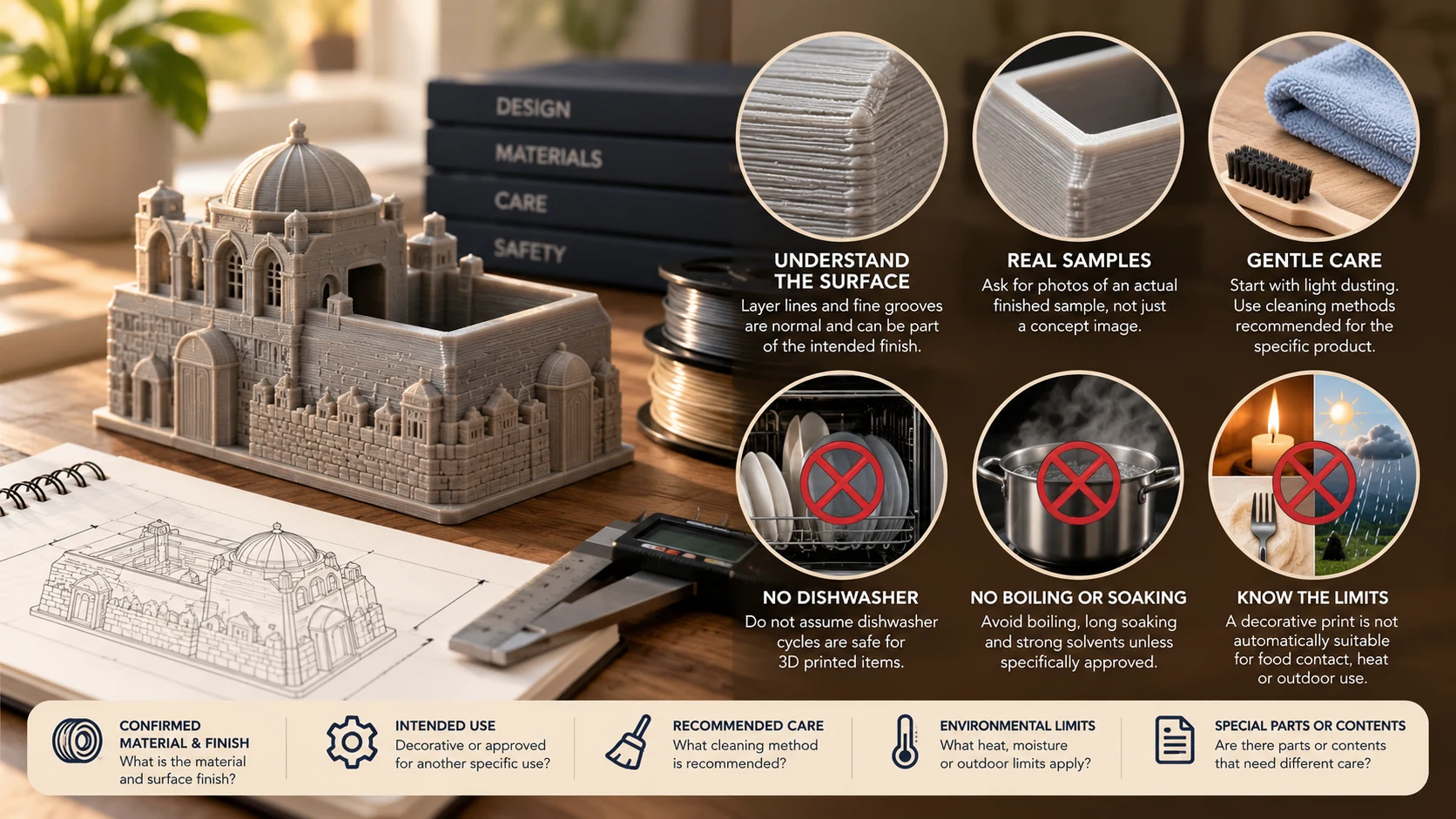
Understand the surface
Layer-based printing can leave fine lines and grooves. These can be part of the object's normal finish rather than signs of damage. Their appearance depends on the design, orientation and finishing process. A concept image, particularly a generated image, is not evidence of how a production sample will look.
For frequently handled items, ask for photographs of a real sample and clarify any finish requirements before approving a quote.
Use gentle care until specific instructions are available
For a dry decorative object, gentle dusting is a cautious starting point. Do not assume that dishwasher cycles, boiling water, long soaking or strong solvents are compatible with an unspecified print. Even a cleaning method that seems harmless for a material can affect a thin wall, an adhesive, a coating or an assembled part.
If an object holds a mezuzah parchment or tefillin, protect those contents from all cleaning moisture and follow the relevant religious and care guidance. Cleaning a case is not the same as cleaning its sacred contents.
Keep material and use claims separate
An attractive print is not automatically suitable for direct food contact, exposure to flames or outdoor weather. Prusa's guidance explains why a filament's chemistry alone does not establish the food-contact safety of a finished FDM object: surfaces, additives and printing equipment also matter.
No cleaning routine can turn an unverified decorative piece into certified food-contact equipment. Review the food and heat safety guide before choosing a table accessory for a particular use.
When to ask for help
If a surface becomes sticky, cracked, distorted or unusually discolored, stop using the object for its intended purpose and ask about the appropriate next step. Do not attempt a repair that changes a load-bearing or protective function without guidance for the actual design.
Questions to keep with your purchase
- What is the confirmed material and finish?
- Is the object decorative or approved for another specific use?
- What cleaning method is recommended?
- What heat, moisture or outdoor limits apply?
- Does it have parts or contents that need different care?
The current store's material and safety details remain subject to merchant review. Consult the final listing rather than applying this general article as a product-specific guarantee.
Sources and further reading
- Choosing a Tefillin Storage Box Without Changing Your Storage Practice
A practical checklist for protective covers, internal dimensions, straps and respectful storage of your existing tefillin.
- 3D-Printed Judaica, Food and Flames: What Not to Assume
Separate decorative use from food-contact and heat safety when considering Shabbat, Hanukkah or Passover accessories.